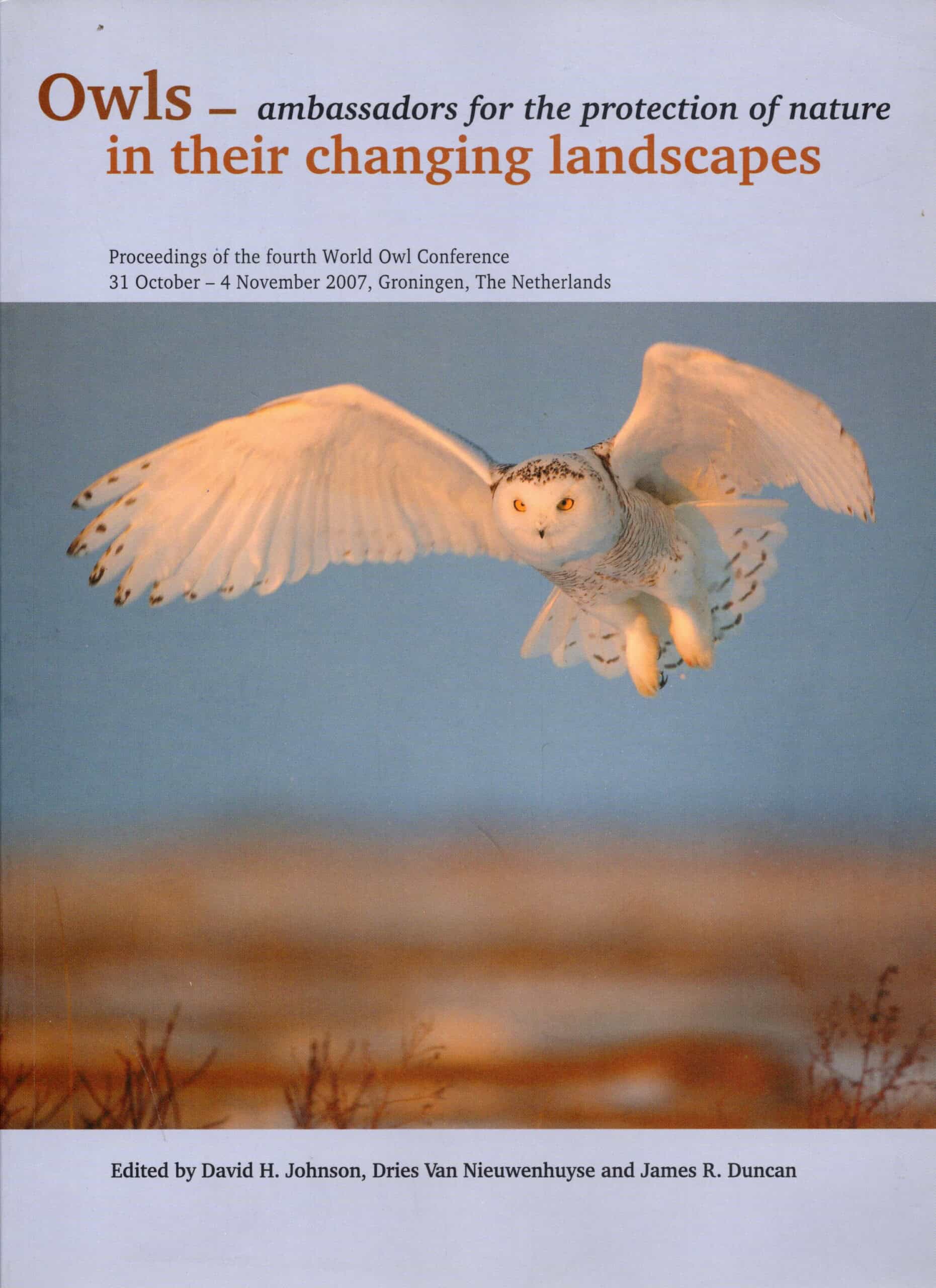
Although through the centuries many owl species have benefited from the activity of people, nowadays, many species are locally or even globally under threat from intensified human impact on their landscapes. Destruction of natural habitats, forestry practices, changes of land use in agricultural areas, and increased infrastructure contribute substantially to population declines of owls. In addition, insecticides and rodenticides limit the amount of food available and may cause secondary poisoning. The problems facing owls are not at all solely theirs, as they affect many creatures that share their living space. Many animal species will thus benefit from owl conservation efforts. Conservation hinges on a thorough understanding of owl biology and interactions within ecosystems in which the owls live. The gain and spread of scientific knowledge and the exchange of experiences regarding owl-related nature protection projects are very important in achieving conservation objectives. This volume of Ardea offers a superb collection of papers on owl biology and conservation as presented during the fourth World Owl Conference held in Groningen, The Netherlands.
€7.95
Staat boek: Boek is in uitstekende staat.
Book is in excellent condition.